The financial reporting process ensures accuracy and transparency in financial management by collecting data from sources like sales records and bank statements, recording it using double-entry bookkeeping, and classifying it into assets, liabilities, income, and expenses. Summarize the data to prepare key financial statements such as the balance sheet, income statement, and cash flow statement, adhering to accounting standards like GAAP or IFRS. Analyze these statements with ratio analysis and trend analysis, report findings to stakeholders, conduct external auditing for compliance, and distribute the finalized reports digitally to enhance compliance, decision-making, and stakeholder trust.
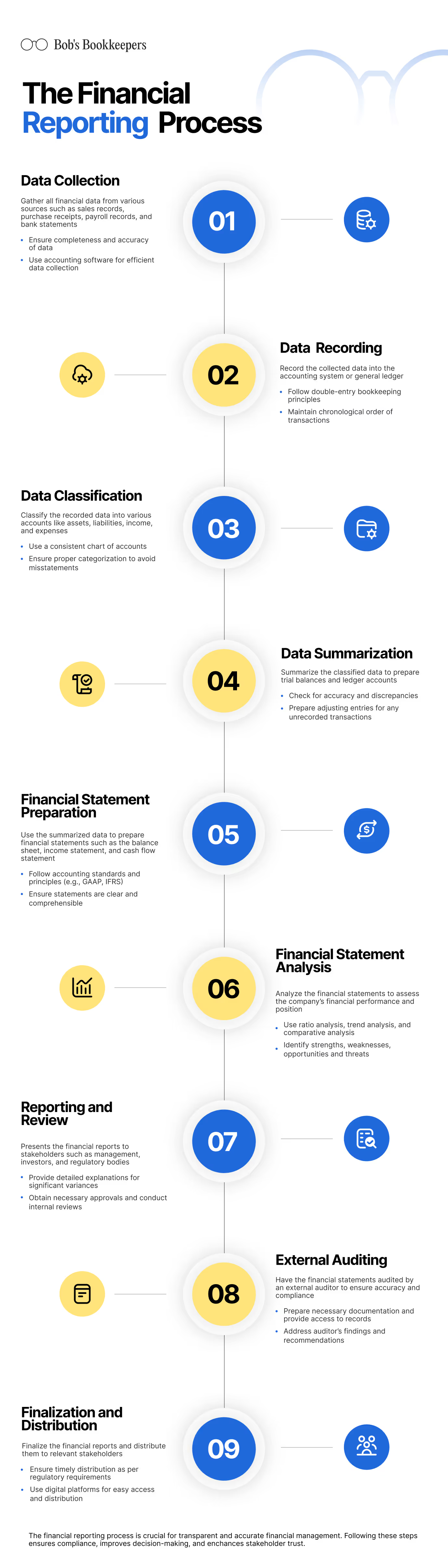

The financial reporting process is a structured sequence of steps used to collect, record, and analyze financial data to produce accurate financial statements.
The process includes data collection, recording, classification, summarization, financial statement preparation, analysis, reporting, auditing, and final distribution.
Data classification ensures transactions are correctly grouped into assets, liabilities, income, and expenses, reducing errors and improving accuracy.
The key statements include the balance sheet, income statement, and cash flow statement.
Financial statement analysis helps evaluate performance using ratios and trends to identify strengths, weaknesses, and potential risks.
External auditing ensures compliance, verifies accuracy, and builds trust with stakeholders by independently reviewing financial reports.

