Xero works well for businesses that have it set up correctly for their specific operations and maintained consistently by someone who understands both the platform and the financial requirements behind it. The gap between those two conditions is where most Xero-related problems actually originate, not a software limitation, but a configuration or process one.
Xero bookkeeping services from Bob's Bookkeepers cover both the technical and the accounting sides of that equation. The platform gets configured around the actual business model. The ongoing bookkeeping is performed to the standard that produces financial data worth making decisions from.
At Bob's Bookkeepers, every Xero engagement starts with understanding the business before adjusting anything in the platform. Revenue recognition requirements, expense categories, reporting needs, existing software connections, all of it shapes how the Xero file gets structured rather than being accommodated as an afterthought once the default setup is already in place.
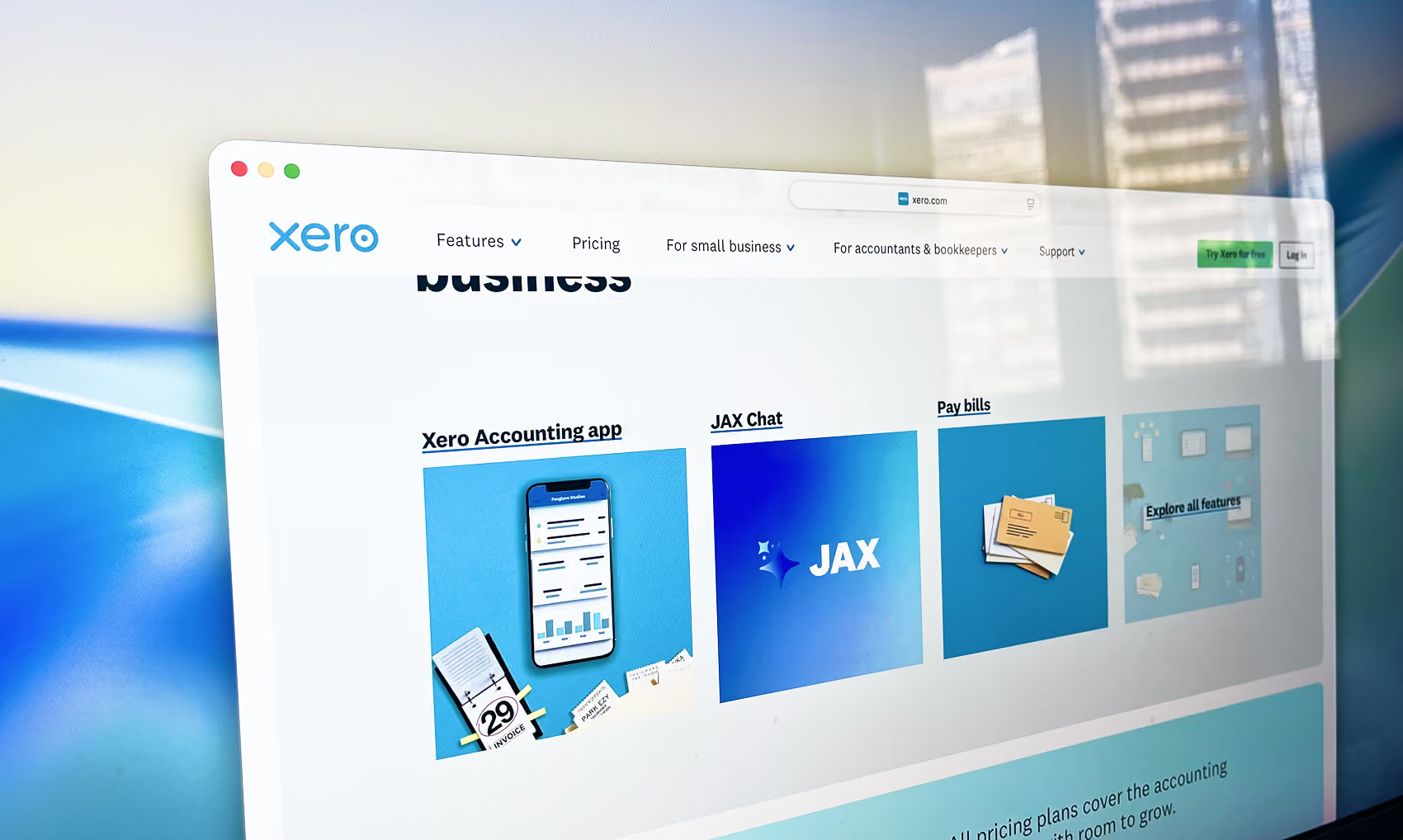

Xero bookkeeping solutions at Bob's Bookkeepers are built to accommodate that growth rather than requiring a reset each time the business changes significantly. When a new revenue stream needs tracking, the chart of accounts is updated to reflect it. When a second location requires location-level reporting, tracking categories are configured. When the business adds international operations, multi-currency is enabled and exchange rate treatment is applied consistently.
Xero accounting services at the right level of configuration mean the platform grows alongside the business rather than becoming a constraint on it, each change addressed at the point it becomes necessary rather than deferred until the file is too disorganized to produce reliable reports.
Xero's value as a platform depends significantly on how well it connects to the other systems the business uses. A point-of-sale system, a CRM, an inventory management tool, a payroll platform, an expense management app, each of these carries financial data that either flows into Xero automatically or gets re-entered manually by someone who has better uses for their time.
Xero payment services and third-party integrations connect the transaction at the point it occurs to the corresponding record in Xero without a manual step in between. A sale closes in the CRM and the invoice generates in Xero. A payment processes through the payment gateway and the reconciliation updates automatically. An expense is submitted through the expense app and the coding carries through to the Xero transaction without anyone transcribing it.
Apps that integrate directly with Xero and commonly improve workflow for businesses at different stages:
The integration setup determines how much of the Xero workflow is automated and how much still depends on manual input. Getting it right from the start is substantially less effort than correcting a year of data that moved through the wrong mapping.
A SaaS company recognizing subscription revenue under ASC 606 requires different Xero configuration than a construction firm tracking job costs across concurrent projects. A hospitality business reconciling daily point-of-sale takings works differently from a professional services firm billing by retainer. Xero accounting and bookkeeping services built around an industry-specific understanding of how money moves through the business produce more accurate records and more useful reports than a standard setup applied regardless of sector.
Xero bookkeeping accounting services at Bob's Bookkeepers are configured around the specific revenue model, expense structure, compliance obligations, and reporting requirements of each engagement:
Industry-specific configuration is not a premium add-on, it is what makes the financial data in Xero actually reflect how the business operates rather than approximating it through generic categories.
Businesses at the scale where multiple entities, international operations, or complex consolidation requirements come into play need Xero accountants services that go beyond standard monthly bookkeeping. The platform supports multi-currency, multi-entity tracking, and consolidated reporting across organizations, but those features need to be configured and maintained correctly to produce accurate results.
Xero bookkeeping for scaling enterprises at Bob's Bookkeepers covers:
For businesses considering a move to Xero from another platform, Accounting Software Migration Solutions covers the full scope of what a system transition involves, data migration, chart of accounts mapping, and reconciliation at every stage to confirm the data moved correctly.
Pricing for Xero accounting and bookkeeping services depends on transaction volume, the number of entities, the reporting complexity, and the level of advisory involvement included in the engagement. A business with straightforward monthly bookkeeping requirements costs less than a multi-entity operation with international transactions and investor reporting.
Factors that determine the scope and cost of an engagement:
Most engagements are quoted as a fixed monthly fee once the scope is reviewed, so the cost is predictable rather than variable based on how much activity occurs in a given month. For engagements involving significant integration setup or historical cleanup, those components are priced separately as one-time project work rather than included in the ongoing monthly fee.
As a trusted outsourced bookkeeping company, we leverage both technology and human expertise to manage your books efficiently. Our team is dedicated to providing accurate and timely financial information, allowing you to make informed business decisions
Xero accounting services leverage the platform's automation, bank feed reconciliation, and integration capabilities to reduce the manual steps in the accounting process. Traditional bookkeeping often involves manual data entry at multiple points in the cycle, receiving a bank statement, entering the transactions, categorizing them, reconciling. In a correctly configured Xero environment, the bank feed pulls transactions automatically, and much of the coding happens through rules applied consistently. The bookkeeper reviews, corrects exceptions, and manages the close rather than performing every step manually.
Integration depends on what the other platforms support. Most widely used business apps, payment processors, CRM systems, payroll platforms, e-commerce tools, have direct Xero integrations through the Xero App Store. Setup involves enabling the connection, mapping the data fields correctly, and testing that transactions flow through accurately before going live. For platforms without a direct integration, third-party tools or custom API connections handle the data transfer. The integration setup is reviewed as part of the initial Xero configuration rather than added as an afterthought later.
Yes. Multi-entity structures are managed through separate Xero organizations, each maintained independently, with intercompany transactions tracked and consolidated reporting produced across the group. International operations require multi-currency enabled in Xero, exchange rates applied consistently, and reporting that separates foreign currency transactions from domestic ones where required. Xero payroll services for international operations are coordinated through Xero-connected payroll platforms that handle jurisdiction-specific compliance rather than attempting to manage international payroll obligations through Xero's domestic payroll tools.
Xero payroll services are configured around the specific compliance requirements of each jurisdiction, federal and state withholding rates applied at current levels, remittance schedules followed accurately, and year-end filing completed on time. When payroll spans multiple states, each employee's withholding profile is set up to reflect the correct jurisdiction rather than applying a single rate across the entire payroll. Compliance requirements that change, minimum wage updates, new leave entitlements, revised tax rates, are updated in the payroll configuration before the next pay run rather than after an error has already been submitted.
The migration process follows a defined sequence regardless of the source system. Historical financial data is exported from the existing platform and reviewed for accuracy before anything imports into Xero. The chart of accounts in Xero is structured to match the categorization in the source system, or improved where the original categorization was not serving the business. Open balances as of the migration date are entered and verified against source records. A reconciliation confirms the Xero opening balances match what the old system showed before any current-period transactions are recorded. For businesses moving from significantly different platforms, the migration timeline allows for parallel running of both systems until the Xero file is confirmed as accurate.